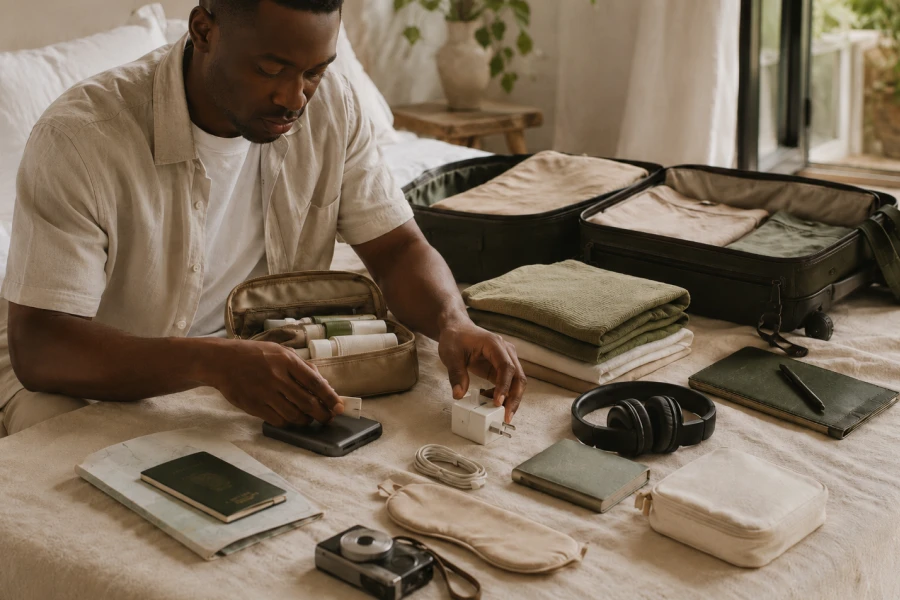
International trips create a special kind of packing pressure. An international travel packing list helps transform that pressure into a calm sequence of decisions. It keeps essentials visible before the suitcase is full. It also separates what is necessary from what merely feels reassuring. Documents, medications, weather layers, and charging needs deserve early attention. Clothing decisions can come later. This order prevents the common panic of remembering an important item at midnight. A strong packing process starts earlier than most people expect. It gives you time to notice gaps. It gives you space to make smarter choices. Most importantly, it lets departure day feel manageable.
Last-minute packing usually creates clutter because every choice feels urgent. Start several days before departure when possible. Place documents, medications, and essential electronics in one visible area. Check what needs charging, printing, refilling, or replacing. Then review weather forecasts and your planned activities. This timeline reveals needs before stores close or shipping becomes impossible. It also prevents random shopping from filling your bag with unnecessary extras. A simple timeline makes packing feel less emotional. You are not trying to remember everything at once. You are completing small decisions in a useful order. That is how preparation becomes calmer and more reliable.
Essentials deserve a separate category because they create the biggest problems when forgotten. Keep identification, payment methods, prescriptions, required documents, and key contact information easy to access. Carry backup options where appropriate. Do not bury important items beneath clothing. Think through the first day after arrival. What will you need if your checked bag is delayed? What will make an overnight flight more comfortable? A focused set of international packing essentials protects you from common travel disruptions. This preparation does not need to be elaborate. It simply needs to prioritize the items that are hardest to replace quickly.
Luggage should match how you will move, not merely how much you can fit inside. Consider stairs, public transportation, hotel changes, and surface conditions. A large suitcase may be helpful for one kind of trip and frustrating for another. Wheels are useful on smooth paths but less helpful on uneven streets. A backpack can offer flexibility but may become uncomfortable when overloaded. Choose the smallest option that meets your actual needs. That decision encourages better packing from the start. It also makes you less likely to collect unnecessary items before departure. Good luggage supports movement rather than demanding constant attention.
Weather and culture both influence what belongs in your bag. Check conditions at different times of day. Consider whether indoor spaces use strong air conditioning or heating. Look at the activities you actually booked. Then choose layers that work together. Avoid packing outfits for every imaginable possibility. Instead, bring options that adapt. A few well-selected lightweight luggage choices can serve more than one purpose and reduce your total weight. Planning for reality makes getting dressed easier abroad. It also prevents the suitcase from becoming a collection of hypothetical needs.
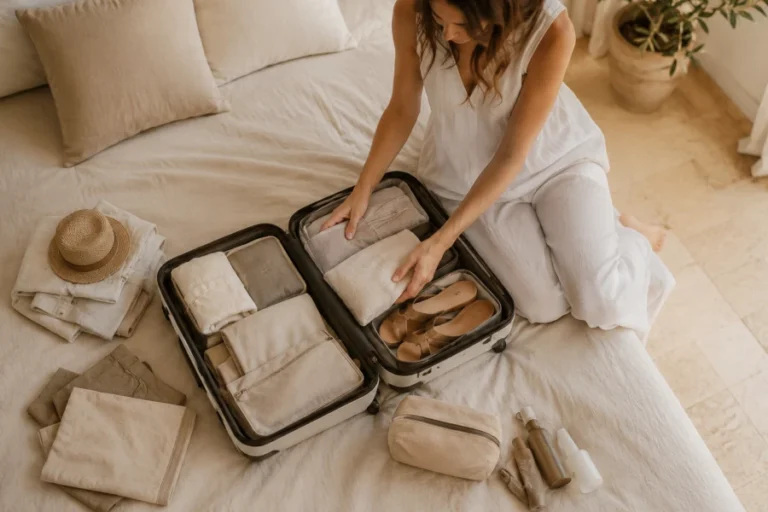
The final review should reduce uncertainty, not add more items. Lay everything out before it enters the bag. Look for duplicates. Remove pieces that only work with one outfit or one unlikely scenario. Ask whether each item is worth carrying through the whole trip. This question creates useful discipline. It also highlights empty space that can remain empty. Leave a small margin for purchases, laundry, or a changed plan. A suitcase does not need to be filled to be complete. In fact, extra room often makes travel much easier. A good final review protects both organization and flexibility.
Departure day becomes easier when you can find what matters without searching. Put travel documents, headphones, charging cables, and comfort items in consistent places. Keep a small arrival kit accessible. Prepare a quick layer for changing temperatures. A simple plan for airport-ready packing reduces the number of choices you face when you are tired. You leave home feeling prepared rather than rushed. That calm carries into the airport, the flight, and the first hours abroad. Packing well is not only about what comes with you. It is about how smoothly the journey begins.



Leave a comment